Neither Bone-Dry Nor Bonkers-Sweet: The Case for Medium-Dry Cider

Photo: medium dry cider pint glass orchard table British pub, via gleamze.com
November is a month of decisions. Do you wear the coat that looks sensible or the one that looks like a sleeping bag? Do you have another roast potato or admit defeat? And in the pub, do you order the bone-dry cider that makes your gums retreat, or the sweet one that tastes like alcoholic apple juice? There is a third option, and it has been sitting there all along, slightly dusty, waiting to be noticed: medium-dry.
First, what medium-dry actually means
Medium-dry is a sweetness band, not a recipe. It sits between dry and medium-sweet, and in a good example there is a touch of residual sugar, but it should be held in check by acidity and tannin. It is not 'a bit sweet' in the way a pudding is sweet. It is sweet in the way a good apple is sweet: fruity, rounded, and still fresh.
How producers get there varies. Some blend dry and sweeter ciders. Some stop fermentation early. Some use keeving, the old West Country trick that lets a cider sweeten itself without turning into syrup. Others may adjust with juice. The method matters less than the result: a cider that has fruit, shape, and a finish you can still taste after the next mouthful.
The style has been tarred by mass-market versions that are simply dry cider with sugar water and a marketing budget. That is not medium-dry. That is a sweet drink wearing a sensible cardigan.
Why it gets overlooked
Craft cider has spent recent years chasing dryness. Dry is admirable. Dry is serious. Dry is the one that gets invited to the tasting notes party and allowed to use words like 'leathery' and 'barnyard'. But dry is not always the best dinner guest. Medium-dry has fruit, roundness, and enough grip to handle food without stripping the enamel off your teeth.
It is also treated as training wheels. Order a medium-dry in some circles and someone will assume you are one pint away from a alcopop. Nonsense. A well-made medium-dry is a diplomatic pint: it can stand up to a roast, calm a curry, and still be pleasant on its own. It is not the compromise. It is the middle way.
Three producers doing it well
These are not the only three, but they are a useful triangulation: Herefordshire reliability, Somerset orchard richness, and East Anglian elegance.
Westons, Herefordshire
Stowford Press Medium Dry is the reliable uncle of British cider: not flashy, always there, and surprisingly good with a pork chop. It is apple-forward, with gentle tannin and a clean finish. You will find it widely, which makes it a useful benchmark. If you are medium-dry curious, start here and pay attention to how the sweetness sits with the fruit rather than on top of it.
Sheppy's, Somerset
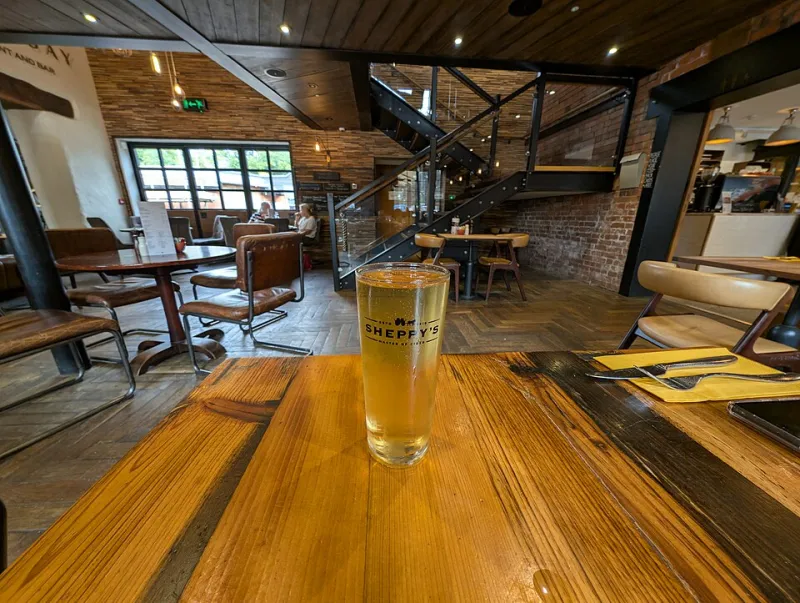
Sheppy's is a family orchard near Taunton, and its 200 Special Vat is a medium-dry with more orchard weight. Expect a rounder texture, soft tannin, and a long apple-skin finish. It feels like a cider for a table with a cloth on it, even if the cloth is actually a tea towel and the table is in a kitchen with a damp dog underneath.
Aspall, Suffolk
Aspall Premier Cru is the more wine-like end of the scale: elegant, restrained, and structured enough to take on roast chicken without blinking. If you know someone who insists cider is either rough or sugary, this is the bottle to leave on their doorstep with a note saying 'try it with dinner'. It may not convert them. But it will make a decent argument.
Five matches from roast to takeaway
1. Sunday roast pork with crackling and apple sauce. This is the classic for a reason. The fruit in a medium-dry picks up the apple sauce, while the acidity cuts through the fat. The crackling gets eaten. Everyone is happy.
2. Roast chicken with lemon and thyme. Medium-dry has enough body for the bird but not so much sweetness that it bullies the herbs. It is the sort of match that makes you wonder why you ever bothered with a second saucepan.
3. Fish and chips. A medium-dry with good acidity is a fine partner for batter. It refreshes the palate between chips, which is important because the chips are not going to refresh themselves.
4. Friday curry. A medium-dry with a bit of tannin can handle spice better than a cold lager, and the touch of sweetness soothes without turning dinner into dessert. Order it with a biryani or a dhansak and see what happens.
5. A Friday takeaway pizza. Tomato, mozzarella, and a medium-dry cider is a better trio than most wine lists manage on a Tuesday. The acidity meets the tomato, the fruit meets the cheese, and the whole thing feels like a small victory over the week.
A tasting route for sceptics
If you are medium-dry sceptical, do not start with a pint in a noisy pub. Buy three bottles: one dry, one medium-dry, one medium-sweet. Chill them to about 8-10C, not to freezer temperature. Pour them into wine glasses. Smell them. Sip them side by side. You are looking for balance, not sugar. A good medium-dry should taste like apples, not like a dissolved pear drop.
Then add food. A slice of mature cheddar, a bit of roast pork, or a handful of chips will do. The moment the sweetness stops being the main event and starts holding the fruit and acidity together, the style makes sense.
Medium-dry is not the boring middle. It is the pint that knows how to behave at dinner. In a world of extremes, that is worth a seat at the table.