Stirring Stuff: The Orchard Fruitcake That Makes Christmas Pudding Nervous
Stir-Up Sunday falls on 22 November in 2026, which means the collect about stirring up hearts has once again been drafted into service as a pudding reminder. Fair enough. But while everyone else is wrestling a basin of suet and candied peel, the orchard would like a word. A fruitcake full of British apples, soaked in dry cider and fed with apple brandy, is every bit as festive as Christmas pudding, considerably less fussy, and far more likely to leave room for cheese.
This is not a declaration of war on pudding. It is a plea for variety, and for a cake that tastes like the orchard rather than the inside of a spice cupboard. It also gives you something to do on the last Sunday before Advent that does not involve explaining why the pudding cloth smells like a stable.
A brief case for mutiny
Christmas pudding has history, ceremony and the undeniable advantage of being set on fire. It also has a habit of sitting in the stomach like a small cannonball, and it demands steaming, storing and a certain blind faith in the household's pudding-management skills. A cider-soaked apple fruitcake is more forgiving. You bake it once, feed it weekly, wrap it up and forget about it until the relatives arrive. If it cracks on top, you call it rustic. If it is a little dry, you feed it again. If it is a lot dry, you pour cider over it and call it a cider cake, which is what it was all along.
The apple is the real point. Britain has an embarrassment of orchard fruit, and a fruitcake is one of the few places where a firm, aromatic apple can shine without turning into sauce. Add cider and apple brandy and you have a cake that tastes of autumn, bonfires and a shed with a slightly loose roof. That is a very good Christmas flavour.
The cake itself
This makes one 20cm round cake. A deep tin is best, lined with a double layer of baking parchment and a little patience.
- 350g mixed dried fruit
- 100g dried apple pieces, chopped
- 150ml dry Herefordshire cider
- 2 tbsp apple brandy, plus more for feeding
- 175g unsalted butter, softened
- 175g dark muscovado sugar
- 3 large eggs
- 225g plain flour
- 1 tsp mixed spice
- 1/2 tsp ground cinnamon
- 1/2 tsp baking powder
- 100g walnuts, roughly chopped
- 2 firm British apples, peeled, cored and diced
- Finely grated zest of 1 lemon
Put the mixed dried fruit and dried apple in a bowl, pour over the cider and brandy, cover and leave overnight. This is not optional unless you enjoy cake with the texture of gravel.
Heat the oven to 150C fan or 170C conventional. Cream the butter and sugar until pale and fluffy. Beat in the eggs one at a time, adding a spoonful of flour if it looks like it might curdle. Fold in the rest of the flour, the spices and baking powder. Add the soaked fruit and any liquid left in the bowl, the walnuts, diced apples and lemon zest. Mix until evenly combined, then spoon into the prepared tin and level the top.
Bake for about 1 hour 15 minutes to 1 hour 30 minutes, until a skewer comes out with a few moist crumbs but no wet batter. If the top is browning too quickly, cover it loosely with foil. Cool in the tin for 20 minutes, then turn out onto a rack and leave until completely cold.
Feeding it like a prized orchard beast
Once the cake is cold, prick it all over with a skewer and spoon over 2 tbsp of dry cider or apple brandy. Wrap it in baking parchment, then foil, and store it in a cool, dark place. Feed it once a week until Christmas, adding another 2 tbsp each time. Do not drown it. You are feeding it, not waterboarding it.
The cake is good after a fortnight and better after a month. If you are making it on Stir-Up Sunday, it will be ready for cutting in mid-December and will still be going strong at New Year, assuming it has not been demolished by a passing uncle with a cider habit.
Which apples hold their shape?
Egremont Russet is the star here: firm, nutty and happy to stay in cubes. Ashmead's Kernel and Ribston Pippin are also excellent if you can find them. Cox's Orange Pippin works well too, though it softens more. Avoid big chunks of Bramley, which collapse into mush and make the cake taste like pudding wearing a hat. If you want Bramley's moisture, grate half of one into the mixture and leave it at that.
Dried apple is the quiet hero. It gives the cake a concentrated orchard flavour without adding more water, and it soaks up the cider like a tiny fruity sponge. Look for unsulphured dried apple if you can; it tastes more of apple and less of a chemistry lab.
Serve it with scrumpy, not a cuppa
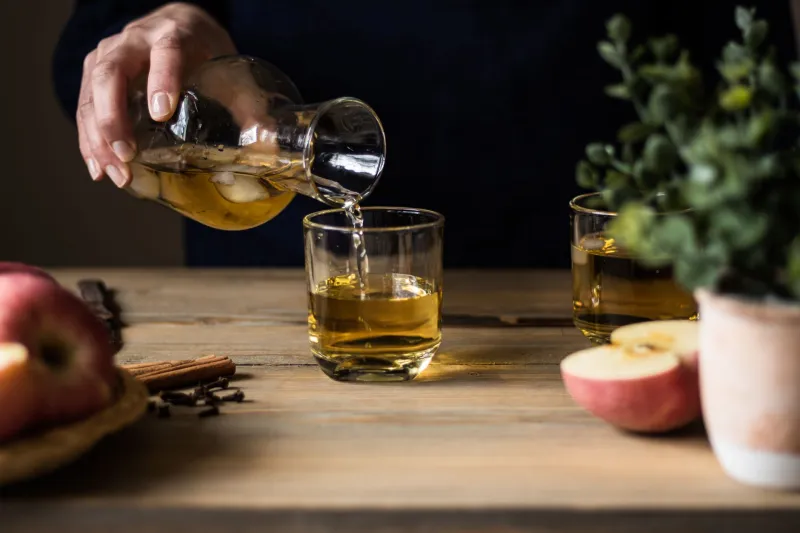
Tea is fine for a Tuesday slice, but Christmas deserves something with a bit more grip. A dry, tannic Herefordshire cider is the natural match: the tannin cuts through the butter and sugar, the acidity lifts the apple, and the gentle fizz keeps the whole thing from becoming claggy. A still scrumpy works too, especially if you like a cake accompaniment that argues back. If you want to go full orchard, serve a small glass of apple brandy alongside and let the cake do the talking.
Christmas pudding can keep its flames and its brandy butter. This year, stir up a cake instead, feed it well, and put a slice next to a glass of cider. It is the most orchard-friendly thing you can do on the last Sunday before Advent, and it beats explaining to Aunt Maureen why the pudding has a mysterious crust.